A Look Ahead: School Funding Predictions for 2027
26 April 2026
You know that feeling when you’re budgeting for a big family trip, and you’re not sure if you’ll have enough gas money to make it past the next state line? That’s exactly where American education is sitting right now—staring at a map of 2027 with a half-tank of gas and a lot of hope. School funding has always been a messy, complicated puzzle, but the next few years? They’re shaping up to be a wild ride. Let’s pull back the curtain and look at where the money’s going, where it’s coming from, and what it means for your kid’s classroom.

The Great Unraveling: Why 2027 Feels Different
Let’s be real for a second. School funding has never been a smooth ride. It’s more like a rollercoaster designed by someone who hates rollercoasters—jerky, unpredictable, and occasionally makes you want to throw up. But 2027? That year is shaping up to be the moment when the tracks either hold or collapse.Why? Because we’re staring down the barrel of several massive shifts at once. The pandemic-era federal money (you know, those billions that kept schools afloat during COVID) is officially gone. Poof. Like a mirage in the desert. By 2027, the last of those ESSER funds will have evaporated, leaving districts to figure out how to keep programs running without that safety net. Imagine your paycheck suddenly getting cut by 20%—but you still have to pay the same mortgage. That’s the vibe.
But here’s the kicker: enrollment numbers are dropping. Birth rates have been declining for years, and by 2027, many districts will have significantly fewer students. That sounds like a good thing for funding, right? Less kids, less cost? Not so fast. School funding formulas are sticky. They’re often based on attendance or enrollment numbers from previous years, so districts can get caught in a lag where they’re funded for students who no longer exist. It’s like ordering pizza for a party that already left. You’re stuck with the bill and nobody to eat it.

The State Budget Squeeze: A Tale of Two Americas
Here’s where it gets interesting—and a little scary. State funding is the backbone of most school budgets, and by 2027, many states will be feeling the pinch from their own economic hangovers. Let’s break it down into two camps.Camp A: The Boom States. Think Texas, Florida, Arizona. These states are growing like crazy. People are moving there, businesses are setting up shop, and property values are skyrocketing. For schools, that means more local tax revenue from property taxes. Sounds great, right? Well, it’s a double-edged sword. More people means more demand for schools, more teachers needed, and more infrastructure costs. Plus, property tax revenue can be volatile—if the housing market cools (and it always does), those districts could see a sudden drop. It’s like riding a wave that could crash at any moment.
Camp B: The Stagnant States. Think Illinois, New York, Michigan. These states are dealing with population loss, aging infrastructure, and pension obligations that are eating up larger chunks of the budget. By 2027, many of these states will have to make tough choices: cut school funding, raise taxes, or both. And here’s the brutal truth—pension costs for retired teachers are often mandated by law, so they get paid first. That leaves less money for current students. It’s like having a massive credit card bill from a vacation you took ten years ago, and you’re still paying it off while trying to plan a new trip.
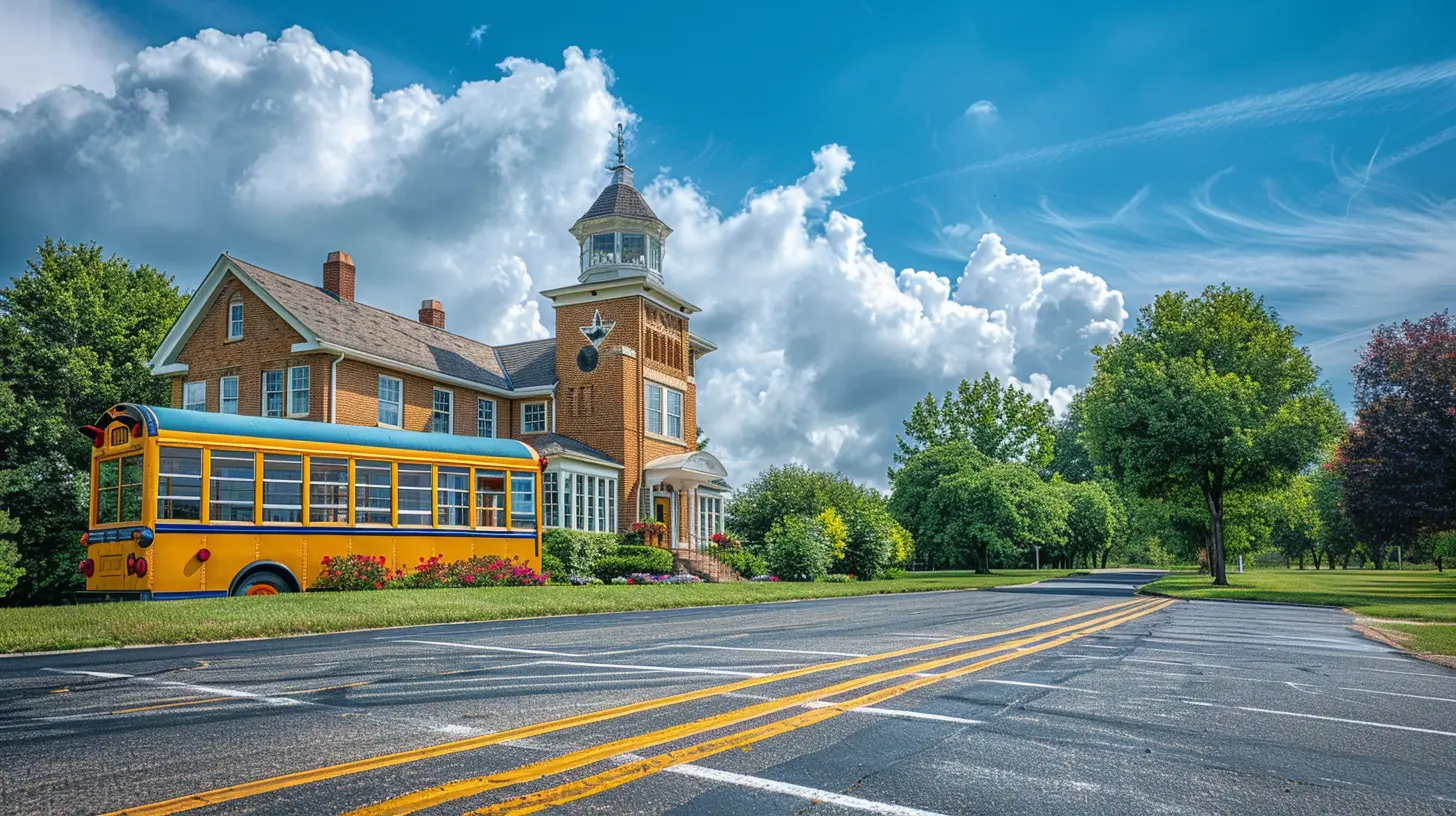
The Federal Wildcard: What Happens in D.C. Doesn’t Stay in D.C.
Let’s talk about the elephant in the room—the federal government. For years, Washington has played a supporting role in school funding, chipping in about 8-10% of total K-12 spending. But by 2027, that role could shift dramatically. Why? Because the political winds are blowing in a new direction.There’s a growing push for “school choice” at the federal level. That means vouchers, education savings accounts, and charter school expansion. If these policies gain traction, we could see federal dollars following students to private or religious schools, rather than staying in the public system. Imagine a river that suddenly splits into a dozen smaller streams—some of those streams might dry up entirely. For public schools, that could mean less funding per student, especially in urban and rural areas where private options are limited.
But here’s the hopeful side: there’s also a movement for “equity-based funding.” Some lawmakers are pushing for formulas that give more money to districts with higher poverty rates, more English language learners, or more students with disabilities. By 2027, this could become a reality in several states. It’s like finally acknowledging that some kids need a bigger backpack to carry the same load.

The Teacher Pay Crisis: Will 2027 Be the Breaking Point?
You can’t talk about school funding without talking about teachers. And let’s be honest—the teacher shortage isn’t just a headline; it’s a crisis. By 2027, we’re going to see a massive wave of retirements from Baby Boomer educators. That’s a lot of experience walking out the door. And who’s coming in to replace them? Not enough people.Why? Because pay hasn’t kept up. Adjusted for inflation, teacher salaries have actually declined in many states over the past decade. By 2027, unless there’s a major shift, starting teachers in some districts will be making less than they would at a fast-food chain. That’s not an exaggeration—it’s a math problem.
So where’s the money going to come from to fix this? Some districts are getting creative. They’re using local tax levies, bond measures, and even partnerships with businesses to boost teacher pay. But those are Band-Aids on a bullet wound. The real solution? States need to overhaul their funding formulas to prioritize salaries. It’s like trying to run a marathon on a flat tire—you can keep going for a while, but eventually, you’re going to crash.
Technology and Infrastructure: The Hidden Costs
Here’s something most people don’t think about: school buildings are old. Like, really old. The average age of a public school building in the U.S. is over 50 years. By 2027, many of those buildings will need major repairs—new roofs, HVAC systems, plumbing, and electrical work. And that’s not cheap. A single school renovation can cost tens of millions of dollars.Then there’s technology. Remember when we thought the pandemic would be the end of remote learning? Well, it’s not. Hybrid models are here to stay, and that means schools need reliable internet, devices for every student, and cybersecurity to protect all that data. By 2027, districts that haven’t invested in this infrastructure will be left behind. It’s like trying to run a modern business with a fax machine and a rotary phone.
But here’s the silver lining: some states are starting to include technology funding in their formulas. California, for example, has allocated billions for broadband expansion. If other states follow suit, 2027 could be the year when the digital divide starts to close. But it’s a big “if.”
The Special Education Black Hole
Let’s talk about the elephant in the room that nobody wants to name: special education funding. Federal law says schools must provide a “free and appropriate public education” to all students with disabilities. But the federal government has never fully funded its share. By 2027, that gap will be even wider.Why? Because the number of students identified with disabilities is growing. Autism diagnoses are up, mental health needs are skyrocketing, and schools are legally required to provide services—speech therapy, occupational therapy, one-on-one aides, you name it. But the funding hasn’t kept pace. Many districts are using general education money to cover special education costs. That means less money for art, music, and electives. It’s like having a leaky bucket—every time you pour in water, it drips out from a hole you can’t plug.
By 2027, I predict we’ll see more lawsuits and advocacy around this issue. Parents are getting organized, and they’re demanding that the government live up to its promises. If that happens, we could see a major funding shift—or at least a public reckoning.
The Rise of Local Control: Communities Taking Charge
Here’s a trend I’m actually excited about: communities are getting fed up with waiting for state and federal help. By 2027, I think we’ll see a surge in local funding initiatives. Think school bond measures, property tax increases, and even new taxes on things like soda or marijuana to fund education.Take Colorado, for example. Several districts have passed “mill levy overrides” that raise property taxes specifically for schools. In Washington state, some communities have created “education foundations” that raise private money for teacher salaries and programs. It’s like a neighborhood potluck—everyone brings something to the table.
But here’s the catch: this approach only works in wealthy areas. Low-income communities don’t have the tax base to pull this off. So while some schools thrive, others fall further behind. By 2027, we’ll see a widening gap between the haves and have-nots unless we find a way to level the playing field.
The Enrollment Cliff: Fewer Students, Same Costs
I mentioned this earlier, but let’s dive deeper. The “enrollment cliff” is real, and it’s coming straight at us. Birth rates have been declining since the Great Recession, and by 2027, the impact will hit high schools. Fewer students means fewer teachers needed, right? Not exactly.School costs are mostly fixed. You still need a principal, a nurse, a librarian, and a building—even if you have 100 fewer students. So districts face a paradox: they have less money per student because total funding drops with enrollment, but their costs don’t drop proportionally. It’s like paying for a whole pizza when you only eat two slices.
Some districts are responding by consolidating schools. That sounds logical, but it can be devastating for communities. Imagine your kid’s school closing and being bussed 20 miles away. That’s the reality for many rural and small-town districts by 2027.
Mental Health and Safety: The New Budget Line Item
Here’s something that wasn’t even on the radar ten years ago: mental health funding. By 2027, I predict that every school budget will have a dedicated line item for counselors, social workers, and mental health programs. Why? Because the need is undeniable. Kids are struggling with anxiety, depression, and trauma at unprecedented levels.And then there’s safety. After every school shooting, there’s a push for more security—metal detectors, school resource officers, threat assessment teams. But these things cost money. A single security upgrade can run into the hundreds of thousands of dollars. By 2027, schools will have to decide: do we spend on security or on mental health? The answer should be both, but the budget rarely allows it.
The Wild Card: Artificial Intelligence and Automation
Okay, let’s get a little futuristic. By 2027, AI will be deeply embedded in education. That could be a game-changer for funding. Imagine AI-powered tutoring systems that reduce the need for expensive intervention programs. Or automated grading systems that free up teacher time. These tools could lower costs while improving outcomes.But they also require upfront investment. Schools will need to buy software, train teachers, and maintain the technology. And if the AI tools are proprietary, districts could get locked into expensive contracts. It’s like buying a new car—you save on gas, but the payments are brutal.
A Call to Action: What You Can Do
So where does this leave us? Honestly, the future of school funding in 2027 is uncertain. But uncertainty doesn’t mean hopelessness. Here’s the thing—you have power. You vote. You pay taxes. You can show up to school board meetings and demand transparency. You can support local levies and bond measures. You can talk to your state representatives about funding formulas.And most importantly, you can stay informed. Because the more we understand about how school funding works, the better we can fight for what our kids deserve. It’s not just about numbers on a spreadsheet. It’s about whether a third-grader has a librarian, whether a high schooler has a counselor, and whether every kid has a chance to succeed.
The road to 2027 is bumpy, but it’s not impossible. We just have to decide that we’re willing to pay the fare.
all images in this post were generated using AI tools
Category:
School FundingAuthor:

Madeleine Newton
Discussion
rate this article
2 comments
Sheena McCallum
Great insights! It’s fascinating to think about how school funding will evolve by 2027. Investing in education is crucial for our children’s futures. I’m curious about how these predictions will adapt to ongoing challenges. Excited to see how schools innovate with the resources they receive! Keep up the good work!
April 28, 2026 at 4:26 AM
Roman Huffman
Exciting insights! Understanding future school funding can truly shape our educational landscape. Can't wait to see what's ahead!
April 26, 2026 at 3:35 AM
Madeleine Newton
Thanks for your enthusiasm! The future of school funding is indeed crucial, and I'm excited to share more insights as we get closer to 2027. Stay tuned!