The Role of Play in Developing Critical Thinking in Early Learners
1 March 2026
When we think of play, most of us picture kids running around, giggling, and having fun. But did you know that play isn’t just about entertainment? It’s actually a powerful tool in helping young children develop critical thinking skills. Yes, those seemingly simple activities, from stacking blocks to playing pretend, are doing much more than keeping kids busy. They’re laying the foundation for future problem-solving, decision-making, and analytical thinking.
In this article, we’ll dive into how play fosters critical thinking in early learners and why it’s so important. Whether you’re a parent, teacher, or just curious about childhood development, this information might just change the way you look at playtime.
What is Critical Thinking in Early Learners?
Before we jump into the role of play, let’s first clarify what we mean by "critical thinking" in the context of early childhood education.Critical thinking refers to the ability to analyze information, evaluate different perspectives, and make informed decisions. It’s about reasoning through problems, considering various outcomes, and developing solutions. While we often associate critical thinking with older children or adults, it actually begins to develop at a very young age.
For early learners—children typically between the ages of 2 and 7—critical thinking might look like:
- Problem-solving: Figuring out how to get a toy out of a tight spot.
- Decision-making: Choosing which crayon to use for their artwork.
- Evaluating cause and effect: Understanding that if they drop a ball, it will bounce.
These early glimpses of critical thinking are essential building blocks for more complex skills later in life. But here’s the kicker: play is one of the best ways to nurture these abilities.

How Play Develops Critical Thinking
1. Play Encourages Problem-Solving
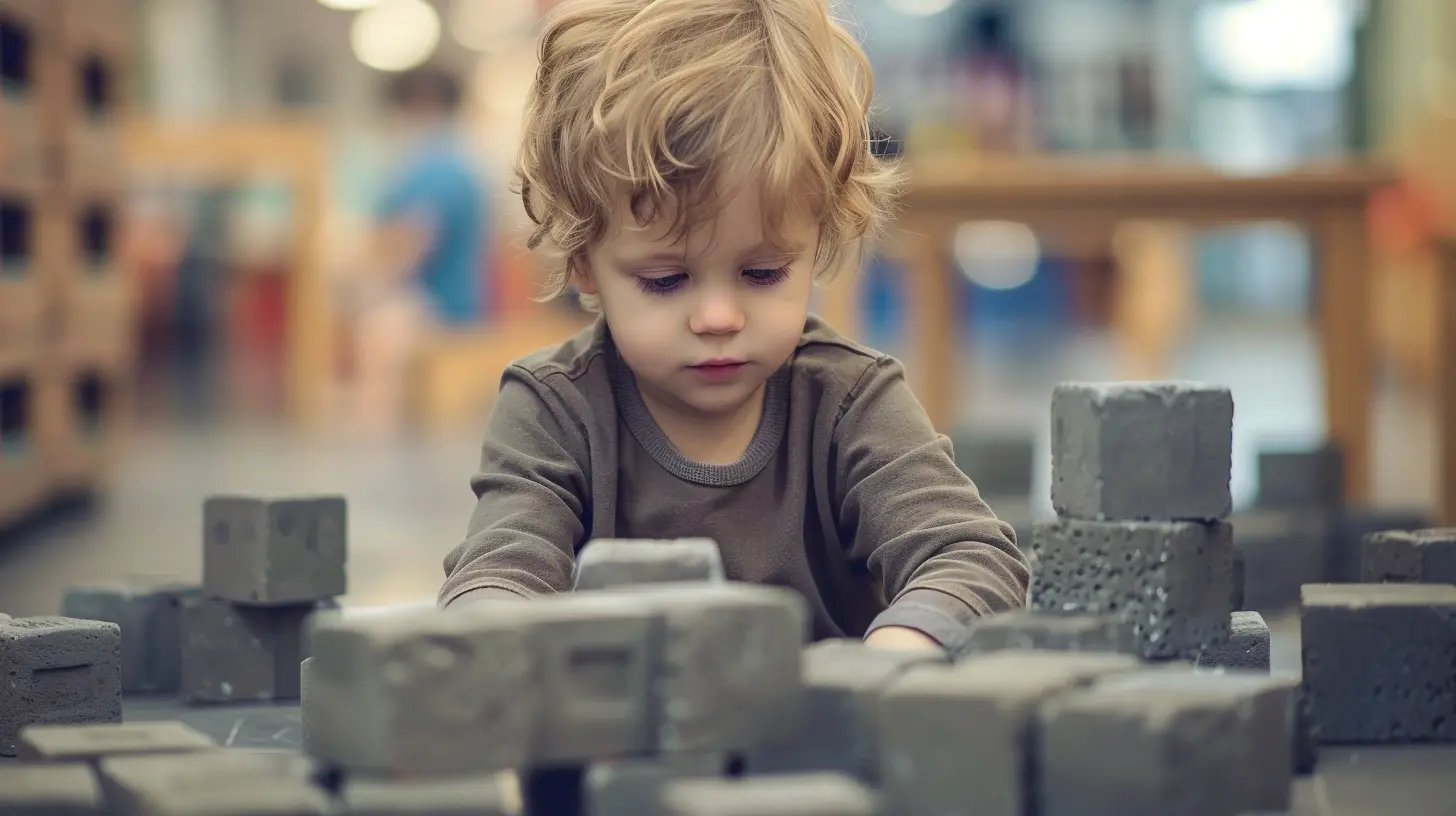
Imagine a child trying to build the tallest tower with blocks. They stack one block on top of another, but the structure keeps falling. What do they do next? They try again, maybe by rearranging the blocks or using a different approach. This trial-and-error process is problem-solving in action, and it’s a core component of critical thinking.Through play, children learn to approach problems in creative ways. Whether it’s figuring out how to fit puzzle pieces together or constructing a fort, they’re constantly experimenting and learning from mistakes. Play encourages kids to think critically about what works, what doesn’t, and why.
2. Play Promotes Decision-Making
In play, children make countless small decisions. Should I be the doctor or the patient in this game of "hospital"? Do I want to use the red or blue block next? Every time they make a choice, they’re practicing decision-making.These choices may seem minor, but they’re important for developing a child’s autonomy and confidence in their own judgment. Over time, making decisions in play helps children develop the ability to weigh options, consider consequences, and make informed choices in real-life situations.
3. Play Fosters Analytical Thinking
Have you ever watched a child meticulously line up their toy cars or sort objects by color? These activities may look simple, but they’re actually helping kids practice categorization and analysis.When children play, they’re often analyzing patterns, relationships, and sequences. For example, when playing with building blocks, they might notice that certain shapes fit together better than others. This kind of analysis is a critical thinking skill that will later help them understand more complex concepts in subjects like math and science.
4. Play Encourages Exploration and Curiosity
Children are naturally curious, and play gives them the freedom to explore their environment and ask questions. What happens if I mix these two colors together? How fast can I make this toy car go?Through exploration, kids learn to question their surroundings and seek answers—two key components of critical thinking. Play encourages them to investigate new ideas, test hypotheses, and discover outcomes on their own, which helps develop their reasoning skills.
5. Play Supports Social Interaction and Perspective-Taking
Many types of play involve interactions with other children or adults. Whether it’s sharing toys, negotiating roles in a game, or working together to solve a problem, social play teaches kids how to consider different perspectives.For example, in a game of "pretend," one child might play the role of a customer while another plays the shopkeeper. To keep the game going, they must understand each other’s roles and negotiate how the interaction will unfold. This kind of role-playing helps children practice empathy, cooperation, and understanding different viewpoints—all critical thinking skills that will serve them well in the future.

Types of Play That Develop Critical Thinking
Not all play is created equal when it comes to developing critical thinking skills. Some forms of play are more effective at encouraging problem-solving, decision-making, and analytical thinking than others. Let’s take a closer look at a few types of play that are particularly beneficial:1. Constructive Play
Constructive play involves building or creating something, whether it’s a tower of blocks, a Lego structure, or a sandcastle at the beach. This type of play encourages kids to think critically about how to achieve their goals, solve problems, and experiment with different approaches.2. Pretend Play
Pretend play, also known as imaginative play, involves children imagining themselves in different roles or scenarios. Whether they’re pretending to be a superhero, a chef, or a teacher, kids must think critically about how to act out their roles and interact with others. Pretend play also helps develop perspective-taking, as children must put themselves in someone else’s shoes.3. Puzzle Play
Puzzles are an excellent way to challenge a child’s critical thinking skills. Whether it’s a traditional jigsaw puzzle or a 3D puzzle, kids must analyze shapes, colors, and patterns to figure out how the pieces fit together. Puzzles also encourage perseverance, as children must keep trying until they find the correct solution.4. Games with Rules
Board games, card games, and other structured games with rules can be great for developing critical thinking. These games often require children to plan ahead, think strategically, and consider the consequences of their actions. Games like "Chutes and Ladders" or "Candy Land" may seem simple, but they’re teaching kids important skills like turn-taking, patience, and decision-making.5. Exploratory Play
Exploratory play involves investigating new materials, objects, or environments. This could mean playing in the sand, experimenting with water, or exploring a new playground. Exploratory play encourages curiosity and a willingness to experiment, which are key components of critical thinking.
How Can Parents and Teachers Support Play-Based Learning?
As a parent or teacher, there are several ways you can support play that promotes critical thinking in early learners:1. Provide Open-Ended Toys
Toys like blocks, art supplies, and dress-up clothes encourage creativity and problem-solving. Unlike toys with a specific purpose, open-ended toys allow children to use their imagination and experiment with different possibilities.2. Encourage Independent Play
While it’s important to engage with your child during playtime, it’s also important to give them space to play independently. Independent play allows children to make decisions, solve problems, and think critically without adult intervention.3. Ask Open-Ended Questions
During play, try asking your child open-ended questions that encourage them to think critically. For example, instead of asking "Is that a red block?" you could ask, "What are you building?" or "Why did you choose that piece?" These types of questions encourage children to explain their thought process and reflect on their decisions.4. Create Opportunities for Social Play
Social play is a great way for children to practice perspective-taking and develop empathy. Encourage your child to play with others, whether it’s siblings, friends, or classmates. If possible, arrange playdates or group activities that allow for collaborative problem-solving and role-playing.5. Provide a Safe, Stimulating Environment
Children need a safe space to explore, experiment, and make mistakes. Provide a stimulating environment with a variety of materials and opportunities for different types of play. Whether it’s a designated play area in your home or a well-stocked classroom, make sure the environment encourages curiosity and exploration.Conclusion
Play is far more than just a fun activity for early learners—it’s a crucial part of their cognitive development. Through play, children develop critical thinking skills like problem-solving, decision-making, and analytical thinking. Whether they’re building with blocks, pretending to be superheroes, or solving puzzles, kids are constantly learning through play. As parents and educators, it’s important to support play-based learning and provide opportunities for children to explore, experiment, and develop these essential skills.So, the next time you see a child engrossed in play, remember: they’re not just having fun—they’re learning how to think critically and solve the challenges of tomorrow.
all images in this post were generated using AI tools
Category:
Critical ThinkingAuthor:

Madeleine Newton
Discussion
rate this article
2 comments
Emma McBride
Play fosters critical thinking skills.
March 19, 2026 at 5:39 AM
Madeleine Newton
Absolutely! Play provides hands-on experiences that encourage children to explore, ask questions, and solve problems, all of which are vital for developing critical thinking skills.
Garrett McGhee
Great insights! Emphasizing play's importance can truly enhance critical thinking in young learners.
March 9, 2026 at 5:59 AM
Madeleine Newton
Thank you! I'm glad you found the insights valuable. Play is indeed a powerful tool for fostering critical thinking in young minds.