The Politics of School Funding: Navigating the Debate
29 June 2026
Let’s cut to the chase—school funding has always been a political minefield. You’ve got educators pleading for help, parents demanding better outcomes, and politicians tossing around buzzwords like "equity" and "accountability" like candy at a parade. Everyone agrees education is crucial, yet when it’s time to talk dollars and cents, things get murky real fast.
In this article, we're diving headfirst into the tangled mess that is school funding. Why is it so controversial? Who really holds the power here? And what can possibly be done to make it better? Buckle up, because we're untangling this knot one thread at a time.
Why School Funding Is a Political Hot Potato
You’d think investing in kids’ futures would be a no-brainer, right? Sadly, that’s not how the game is played. School funding is deeply political because it’s tied to some of the most contentious issues out there—race, class, geography, and, yep, taxes.Politicians use education promises like campaign confetti. They love to rally around platitudes like "leave no child behind" or "build a brighter future." But once the votes are in, priorities often shift, and education budgets end up on the chopping block.
Who Controls the Money?
It’s not just one person or one level of government calling the shots. Funding for schools in the U.S. (and many other countries) comes from a wild mix of local, state, and federal sources.- Local funding—usually from property taxes—means wealthier zip codes often get better-funded schools.
- State governments step in to balance the scales... in theory.
- Federal dollars? They’re the smallest slice but come with strings attached, often pushing national agendas.
This layered mess creates huge disparities. Schools in low-income areas often face outdated textbooks, crumbling buildings, and overworked staff—while schools a few miles away boast high-tech labs and gourmet cafeterias.
The Funding Formula Fiasco
Let’s talk about the black box known as the "funding formula." Sounds fancy, right? It's the algorithm states use to decide how to slice the school funding pie. But here’s the kicker: no two states do it the same way, and many formulas haven’t kept up with modern needs.Some formulas weigh student needs—like poverty levels, special education, or English learners. Others? Not so much. It’s like trying to fix a leaky roof with duct tape—it might hold for a while, but eventually, the whole thing will collapse.
Equity vs. Equality—Yes, There's a Difference
These terms get thrown around a lot, but they’re not interchangeable.- Equality means giving every school the same amount of funding.
- Equity recognizes that some schools need more to achieve the same outcomes.
Think of it like running a race—if one kid starts three laps behind, giving them the same sneakers as the one at the front doesn’t level the playing field.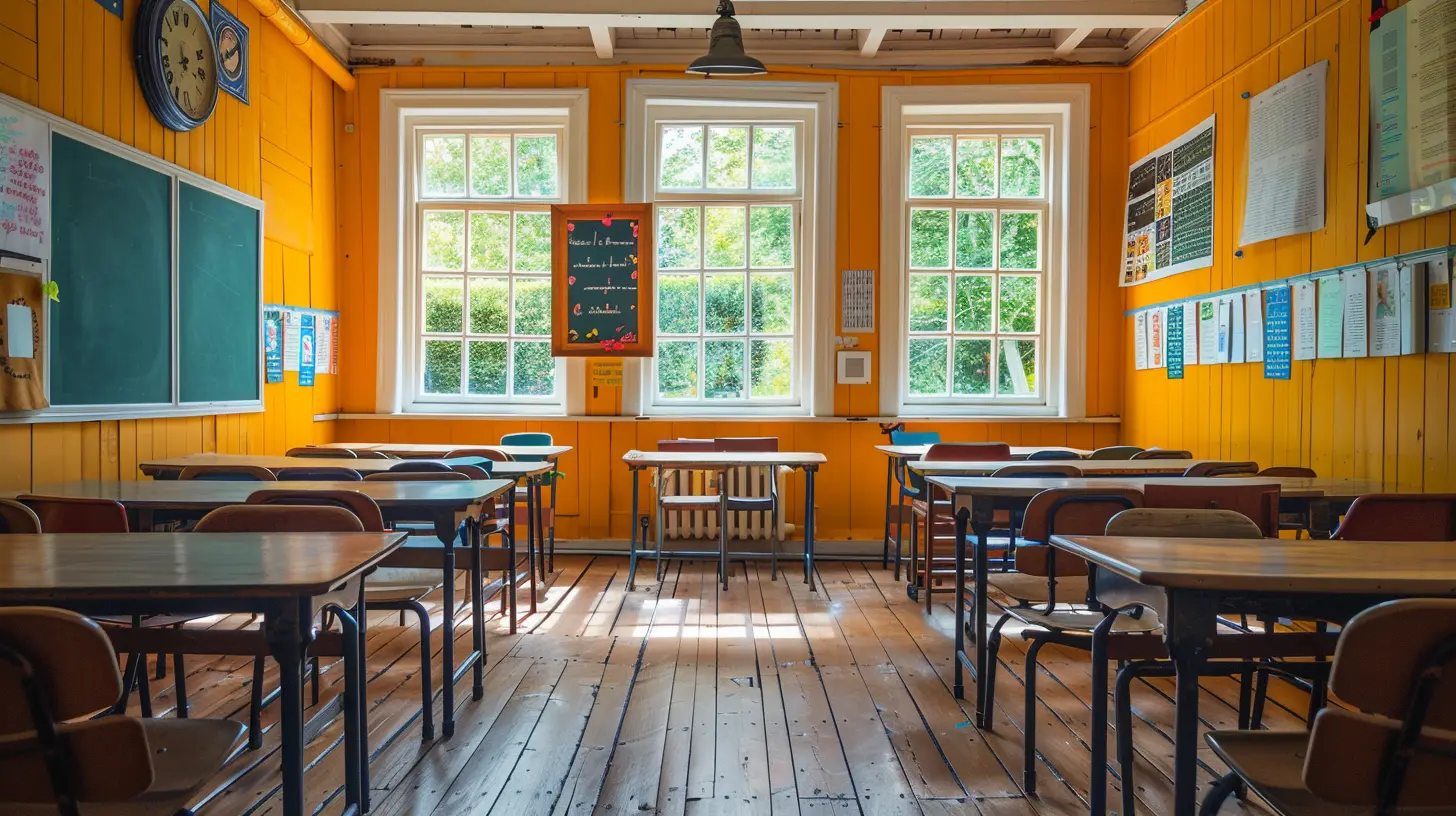
Politics Meets Policy: Who’s Winning (and Losing)?
School funding debates often mirror the larger political landscape. Conservative lawmakers might champion tax cuts and smaller government, which can strangle school budgets. Liberals tend to push for increased education spending, especially in underserved communities.But here’s the ugly truth: even when the party in power talks a big game about education, the actual dollars don’t always follow. It's all about priorities, and sometimes, roads and prisons get more love than students.
Teachers on the Frontlines
Let’s not forget who’s most affected—teachers. They’re the foot soldiers of this whole operation, often making do with less, spending their own money on supplies, and facing burnout at alarming rates. When we underfund schools, we’re essentially telling teachers, "Good luck, you’re on your own."And when teachers strike—as they did in West Virginia, Oklahoma, and Arizona—it’s not just about salaries. It’s about respect, resources, and the right to teach in environments where kids actually have a fighting chance.
The Great Property Tax Debate
If you're scratching your head over why some schools look like college campuses and others resemble fallout shelters, here's your answer: property taxes.Since local property taxes fund a big chunk of public education, richer neighborhoods can afford to lavish cash on their schools. Poorer areas? Not so much. And before you think the state swoops in to fix it, spoiler alert—they often don’t do enough.
Wealth Gaps Become Learning Gaps
This setup creates what many call an "opportunity gap." Kids from affluent areas get access to better tools, more experienced teachers, and more extracurriculars. Meanwhile, students in underfunded schools start life a few steps behind—and it’s tough to catch up.Is that fair? Nope. Is it fixable? Yes—but it requires political will, and that’s in short supply.
Federal Funding: The Double-Edged Sword
The federal government kicks in about 8-10% of overall education funding. Programs like Title I aim to support low-income schools, and IDEA (Individuals with Disabilities Education Act) is meant to help students with disabilities.Sounds good, right? It is—until you dig into the details. These programs are chronically underfunded and overly bureaucratic. Schools have to jump through hoops to access money that often barely moves the needle.
It’s like tossing a glass of water on a house fire and expecting it to go out. Noble intent, weak implementation.
The Role of Race and Segregation
We can’t talk about school funding without addressing race. Schools remain deeply segregated—by color and by class. And yes, it’s 2024, not 1954, but the patterns persist.Predominantly Black and Brown schools often receive fewer resources, face harsher discipline policies, and have fewer experienced teachers. Coincidence? Not even close.
School Choice: Savior or Smokescreen?
Charter schools and school vouchers have been pitched as solutions to public school failures, especially in urban areas.Supporters argue that competition breeds innovation. Critics warn it drains public resources from traditional schools and deepens inequality.
So, what’s the truth? Honestly, it depends. Some charter schools thrive. Others struggle. But when public funds flow into private or semi-private hands with little oversight, public accountability takes a backseat.
So... What Can Be Done?
Glad you asked. Fixing school funding isn’t rocket science, but it does take guts. Here’s what needs to happen:1. Update Outdated Funding Formulas
States need to overhaul how they distribute money—taking into account actual student needs, not just district wealth.2. Shift Away from Property Taxes
We need funding mechanisms that don’t penalize kids for being born into the “wrong” neighborhood. That might mean more state-level funding or redistributing wealth more fairly.3. Prioritize Equity
Real equity means investing more where the needs are greatest. That may not be popular politically, but it’s essential morally.4. Increase Federal Support
If we’re serious about education as a national priority, the federal government should put more skin in the game—and do it right.5. Listen to Educators
Teachers aren’t just employees; they’re the experts. If they say things are broken, believe them—and fund the fixes.Conclusion: It’s More Than Money—It’s About Values
At the end of the day, the way we fund schools says a lot about who we are as a society. Are we okay with some kids learning coding on laptops while others struggle to find a working pencil? Are we content with talking about opportunity but not backing it up with actual investment?The politics of school funding is messy, yes. But it’s not unsolvable. It’s about priorities, values, and having the guts to put your money where your mouth is.
So next time a politician says “education is the foundation of our future,” ask them how much they’re willing to actually invest in that future. Because words are cheap. Schools aren’t.
all images in this post were generated using AI tools
Category:
School FundingAuthor:

Madeleine Newton
Discussion
rate this article
1 comments
Delta Elliott
Understanding the complexities of school funding is vital for parents and educators to advocate effectively for equitable resources and quality education.
July 2, 2026 at 10:36 AM
Madeleine Newton
Absolutely. It's essential for all stakeholders to grasp these complexities to push for fair funding and better educational outcomes.