The Future of Online Learning Techniques in 2027
28 April 2026

Welcome to the Classroom of Tomorrow (No, Really, It’s Here)
Picture this: It’s a Tuesday afternoon in 2027. You’re curled up on your couch, sipping coffee that’s just the right temperature, and your phone buzzes. It’s a notification from your online course: “Your AI tutor noticed you’ve been struggling with quantum mechanics. Want to jump into a 5-minute holographic simulation to see Schrödinger’s cat in action?” You laugh, tap “yes,” and suddenly you’re standing in a virtual lab, petting a very confused cat that exists in two boxes at once. That’s not sci-fi. That’s the future of online learning techniques in 2027.I know what you’re thinking: “Oh great, another article hyping up tech that’ll probably just be a fancier Zoom call.” But hear me out. The shift from 2024 to 2027 isn’t about incremental updates—it’s a full-blown revolution. And the best part? It’s designed to make learning feel less like homework and more like a superpower. Let’s dive into what’s actually coming, why it matters, and how you can ride this wave without feeling like a digital dinosaur.

The End of the "One-Size-Fits-All" Lecture (Good Riddance!)
Remember those old online courses where you’d watch a professor drone on for an hour while you desperately tried to stay awake? The ones where the only “interaction” was a multiple-choice quiz at the end? Yeah, those are going extinct faster than flip phones in 2010. In 2027, online learning techniques are built around hyper-personalization.Instead of a generic curriculum, your course adapts to you—your pace, your learning style, even your mood. Imagine a system that notices you’re a visual learner. When you struggle with a concept, it doesn’t just throw text at you. It generates a 3D animation, a mind map, or even a short story that explains the idea. It’s like having a tutor who remembers every mistake you’ve ever made and uses that knowledge to help you succeed.
Why this matters: Because nobody learns the same way. Forcing everyone through the same funnel is like trying to fit a square peg into a round hole—except the peg is your brain, and the hole is a standardized test. In 2027, learning becomes a conversation, not a monologue.

AI Tutors That Actually Care (And Don’t Judge You)
Let’s be real: Asking a question in a live class can be terrifying. What if it’s a “dumb” question? What if everyone else already knows the answer? In 2027, that fear evaporates. AI tutors are the new norm, and they’re designed to be patient, non-judgmental, and infinitely available.These aren’t the clunky chatbots of yesteryear. We’re talking about AI that can hold a nuanced conversation, adapt its tone based on your frustration level, and even crack a joke to lighten the mood. Stuck on a calculus problem at 3 AM? Your AI tutor is there, ready to walk you through it step-by-step without sighing or rolling its digital eyes.
But here’s the kicker: These tutors don’t just answer questions. They predict them. Using data from millions of learners, they know exactly where you’re likely to stumble and offer help before you even realize you need it. It’s like having a GPS for your brain that warns you about potholes ahead.
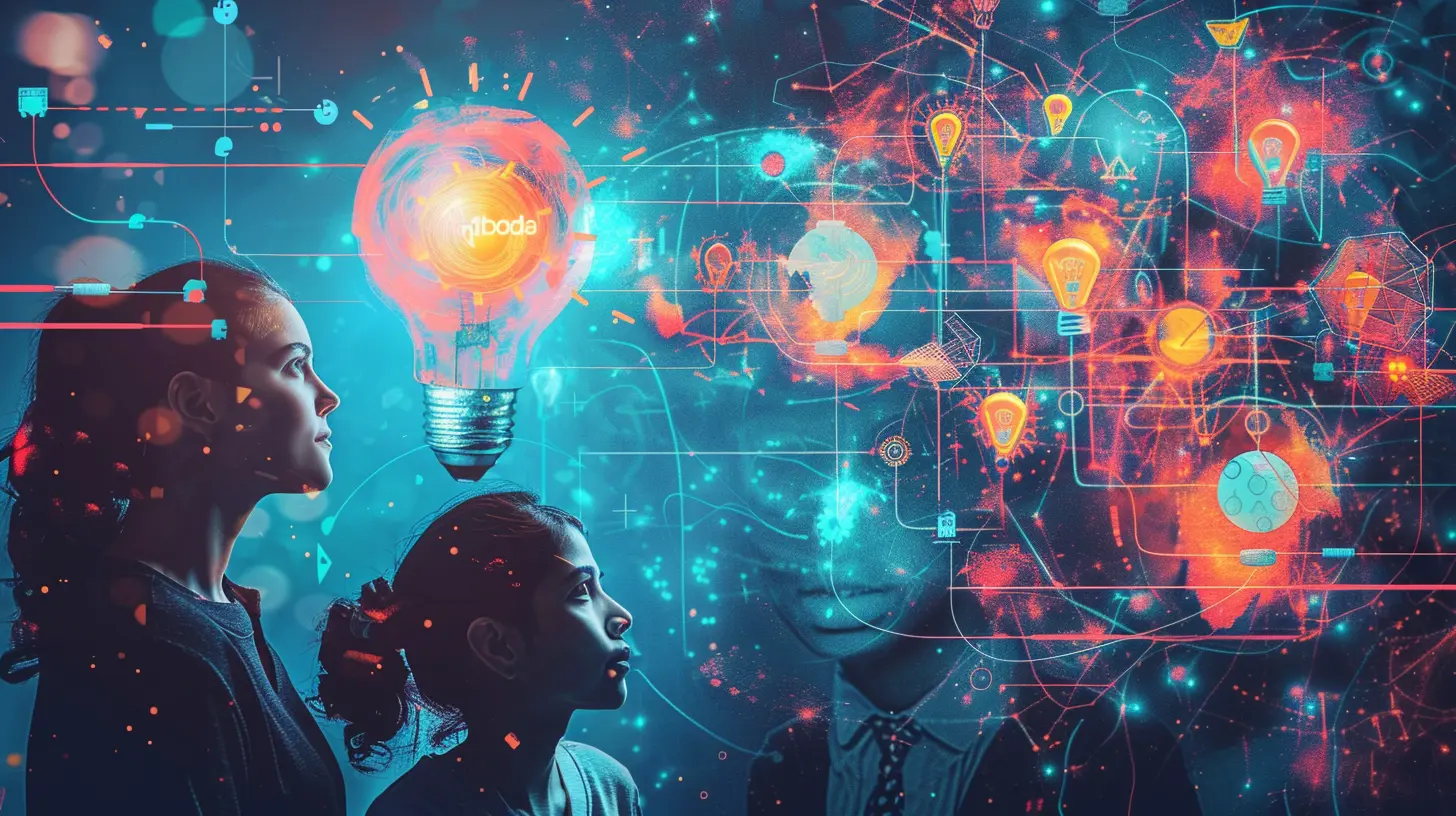
Gamification Gets a Glow-Up (Level Up Your Life)
I’ll admit it: I used to roll my eyes at gamification. “Oh great, another badge for ‘watching a video.’” But in 2027, gamification has evolved from cheap rewards into a full-blown immersive experience. Think less “sticker chart” and more “open-world RPG.”Courses now feature narrative-driven quests, where you solve real-world problems to progress. Learning history? You’re not memorizing dates—you’re negotiating a treaty in a simulated 18th-century European court. Learning biology? You’re diagnosing a patient in a virtual hospital, using clues from lab results to save their life. Each “level” teaches you a new skill, and the stakes feel real because the scenarios are tied to actual career challenges.
The secret sauce: Your brain is wired for stories and challenges. By framing learning as an adventure, the content sticks. You’re not just remembering facts; you’re building muscle memory for problem-solving.
Virtual Reality (VR) and Augmented Reality (AR): The New Whiteboard
Remember when “virtual reality” meant strapping a clunky headset to your face and feeling nauseous after 10 minutes? In 2027, VR and AR are lightweight, affordable, and seamlessly integrated into online learning. And they’re not just for gaming.Here’s a taste: Imagine you’re taking a course on architecture. Instead of looking at 2D blueprints, you put on AR glasses and see a 3D model of a building floating in your living room. You can walk around it, “open” doors, and even see how sunlight hits the windows at different times of day. Or maybe you’re studying anatomy. With VR, you can shrink down and swim through a blood vessel, watching red blood cells bounce past like bumper cars.
Why this works: Because we learn best by doing. Reading about a concept is like reading a recipe—it gives you the idea, but actually cooking is where the magic happens. VR and AR let you “cook” in a safe, low-stakes environment. You can make mistakes, break things, and try again without any real-world consequences.
Microlearning: The Snackable Revolution
Let’s face it: Your attention span in 2027 is probably shorter than a goldfish’s. (No judgment—mine is too.) That’s why microlearning has become the dominant technique. Instead of one-hour lectures, courses are broken into 5- to 10-minute chunks that you can consume between meetings, while waiting for coffee, or during a bathroom break.But here’s the twist: These micro-lessons aren’t isolated. They’re part of a spaced repetition system that algorithmically schedules reviews right when you’re about to forget something. It’s like having a personal assistant who taps you on the shoulder and says, “Hey, remember that concept from two weeks ago? Here’s a quick recap.”
The result: You retain information 60% longer than with traditional methods. And because the lessons are short, you never feel overwhelmed. It’s learning in bite-sized pieces—like a charcuterie board for your brain.
Social Learning: The Comeback of Human Connection
Here’s a paradox: Online learning in 2027 is more high-tech than ever, but it’s also bringing back the human touch. Why? Because we’re social creatures. No amount of AI can replace the spark of a good discussion or the camaraderie of working through a tough problem together.Enter hybrid social platforms. These aren’t your typical discussion forums (where the most recent post is from 2019). Instead, they use AI to match you with study partners who have complementary skills. Stuck on a programming concept? The system pairs you with someone who just aced that module. You help them with something they’re struggling with, and suddenly you’re both learning faster.
Live cohort-based courses are also booming. You join a “class” of 20–30 people who start and finish the course together. There’s a shared timeline, group projects, and weekly live sessions where you actually see each other’s faces. It’s like having a book club, but for career skills. The accountability is real, and so is the friendship.
Voice-First Learning: Alexa Meets Academia
Typing is so 2023. In 2027, voice interfaces are everywhere, and they’ve revolutionized how we absorb information. Imagine asking your smart speaker: “Hey, give me a 10-minute summary of the French Revolution, but focus on the economic causes.” It responds with a conversational overview, complete with sound effects and a “quiz mode” where you answer questions out loud.This is a game-changer for multitaskers. You can “learn” while commuting, cooking, or folding laundry. And because speech is processed differently in the brain, voice-first learning often improves retention for auditory learners. It’s like having a professor in your pocket, ready to lecture on demand—but without the boring parts.
The Blockchain Credential Revolution
Let’s talk about the elephant in the room: certificates. In 2027, the traditional diploma is being replaced by blockchain-based micro-credentials. These are verifiable, tamper-proof digital badges that represent specific skills. Did you master Python? Earn a badge. Did you ace a project management simulation? That’s another badge.Why this matters: Employers are tired of sifting through resumes that say “proficient in Excel” when the candidate can barely make a pivot table. Blockchain credentials are transparent. They show exactly what you know, how you demonstrated it, and who verified it. It’s like a video game achievement system for real life.
The Dark Side (Let’s Be Honest)
I’d be doing you a disservice if I pretended this future is all rainbows and holograms. There are challenges. Digital fatigue is real—staring at screens for 8 hours a day isn’t healthy. Some learners feel isolated despite the social tools. And let’s not forget the digital divide: not everyone has access to high-speed internet or VR headsets.The good news? Educators are aware of these issues. In 2027, courses are designed with “offline modes” that let you download content and learn without Wi-Fi. There’s also a push for screen-free learning using voice, audio, and physical materials. And governments are investing in public VR labs and subsidized devices.
How You Can Prepare for 2027 (Right Now)
You don’t have to wait for the future to arrive. Here’s what you can do today to get ahead:1. Experiment with AI tools. Try an AI tutor like Khan Academy’s Khanmigo or Duolingo’s chatbot. Get comfortable asking questions to a machine.
2. Buy a used VR headset. Even an older model like the Oculus Quest 2 works for educational apps. Explore free anatomy or history simulations.
3. Join a cohort-based course. Platforms like Maven or Outschool offer live, small-group classes. Experience the social side of online learning.
4. Practice microlearning. Use apps like Brilliant or Blinkist to learn in 5-minute bursts. Train your brain to focus in short, intense sessions.
5. Build a digital portfolio. Start earning micro-credentials in your field. Platforms like Coursera and edX already offer blockchain-backed certificates.
The Bottom Line: Learning Is Becoming an Adventure
The future of online learning techniques in 2027 isn’t about replacing teachers or making education robotic. It’s about empowering you to learn the way your brain naturally works—with curiosity, play, and connection. The tools are getting smarter, but the goal remains the same: to help you grow.So, are you ready to swap that boring lecture for a holographic simulation? To trade rote memorization for a quest that feels like a video game? To have an AI tutor that remembers your name and your struggles? The future is knocking. And honestly? It sounds pretty fun.
all images in this post were generated using AI tools
Category:
Learning TechniquesAuthor:

Madeleine Newton
Discussion
rate this article
2 comments
Tia Hughes
By 2027, online learning will transcend traditional boundaries, embracing AI-driven personalization and immersive experiences. Adaptive techniques will not just engage students but challenge them, making education more dynamic and tailored to individual pathways. Exciting times ahead!
June 2, 2026 at 4:19 AM
Madeleine Newton
Absolutely! The future of online learning looks promising, with AI and immersive experiences transforming how we learn and engage. Exciting changes are on the horizon!
Ulysses McLanahan
This article offers a refreshing perspective on online learning's evolution. The insights shared about emerging techniques and technologies are not only thought-provoking but also inspire hope for a more accessible and engaging education. It's exciting to think about the possibilities that 2027 holds for learners everywhere. Thank you for sharing this valuable information.
May 2, 2026 at 11:44 AM