Making Math Fun: Creative Ways to Engage Students
5 February 2026
Let’s face it—math doesn’t have the best reputation. For many students, it's the academic equivalent of broccoli. You know it’s good for you, but you’d rather have pizza. But what if we told you that math can be just as exciting as solving a mystery or playing a game? Hold on tight, because we’re diving into the wonderfully weird and creative world of making math fun!

Why Math Deserves a Makeover
Before we unleash our inner math magician, let’s address the elephant in the room. Why mess with the traditional math approach?Here’s the deal: Students often view math as abstract, dull, and stressful. That’s a recipe for disinterest. And when kids disconnect, the learning stops dead in its tracks. But with a little creativity, humor, and hands-on activities, we can flip the script and turn math into something students actually look forward to.
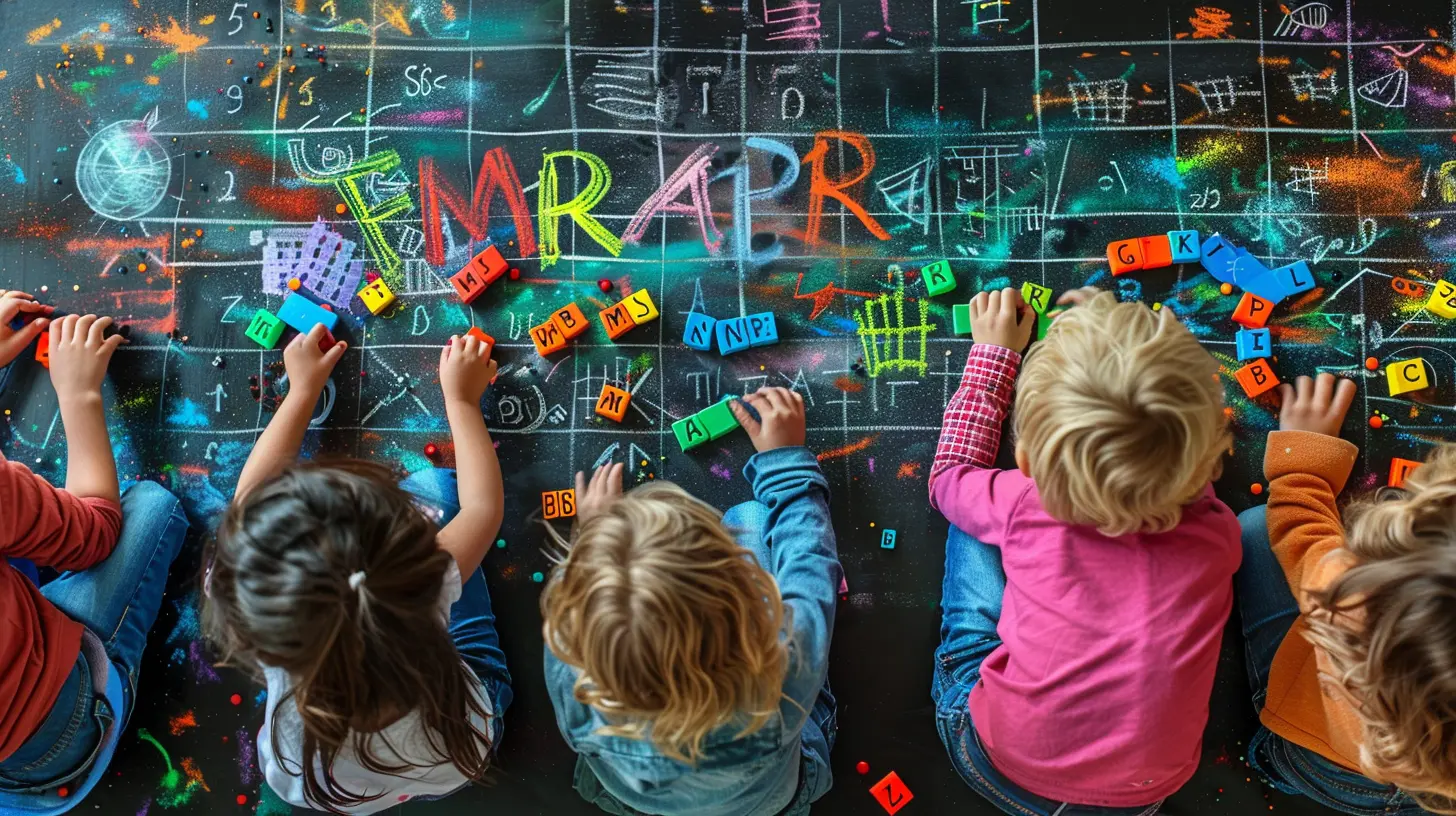
The Secret Sauce: Engagement
What’s the difference between a math lesson students dread and one they enjoy? Spoiler alert: It’s engagement. When kids are engaged, they’re curious, they ask questions, and gasp they even want to solve problems. So, how do we sprinkle some joy into our geometry and fire up fractions?Glad you asked. Let’s get quirky!
1. Turn Math into a Game (Literally)
Ever heard of gamification? It’s the idea of turning learning into a game. And let me tell you—kids eat this stuff up.Math Board Games
Break out some dice and markers. Create simple board games where students move forward by solving problems. Throw in a few “trap” squares. Land on one, and boom—do a challenge question or go back two spaces. Competitive? Yup. Fun? Absolutely.Digital Math Games
There are tons of free apps and websites that make math feel like a video game: Prodigy, Math Playground, and Kahoot!, just to name a few. These let students practice everything from multiplication to algebra in an interactive way.Math Bingo
Who doesn’t love bingo? Customize it with math problems instead of numbers. First student to complete a row? Winner takes home a pencil shaped like a flamingo. Or something equally random and exciting.
2. Incorporate Real-World Scenarios
You know the question: “When am I ever gonna use this?” Well, let’s answer it—with real-life examples!Pizza Fractions
Bring in a pizza (or draw one if budgets are tight) and use it to teach fractions. Half a pizza is suddenly more exciting when it’s cheesy and delicious.Grocery Store Math
Give students a fake budget and a pretend grocery flyer. Ask them to “go shopping” while solving unit rate problems. That’s double-duty: decision-making and math all rolled into one.Plan a Trip
Let kids plan a vacation within a budget. How far can they go? How much will gas cost? What about food and hotels? This combines math, geography, and dreaming big—all in one lesson.3. Math + Art = Math-terpieces
Who said math and creativity can’t mix? Combine math concepts with artistic expression and watch students light up.Symmetry Drawings
Fold a paper in half, draw half of a shape, then reflect it. Voilà—symmetry! It's basically geometry in disguise.Tessellation Projects
Challenge students to create repeating patterns without gaps or overlaps. Think M.C. Escher, but with crayons and imagination.Graph Paper Art
Use graph paper to create pixel art. Assign numbers to colors and color code according to math rules—like multiplication tables or coordinates.4. Bring in Stories and Characters
Humans are wired for stories. Why not turn math problems into mini-adventures?Math Word Problems with Personality
Instead of “If John has 3 apples…”, try:“Captain Fractionbeard has 3 treasure chests, each filled with gold coins. How many total coins does he have?” Bam! Suddenly you’re in Pirate Algebra 101.
Create Math Comics
Let students illustrate their own math problems using stick figures or comic characters. They’ll be crafting stories and solving at the same time.5. Use Movement—Get Those Brains and Bodies Working!
Math doesn’t have to be a sit-down subject. Movement can actually enhance learning. Shake the dust off those calculators and get moving!Math Relays
Set up a relay race with stations. Each station has a math problem. Solve it to move on to the next. It’s like PE class met a math nerd and they became best friends.Human Number Line
Lay a number line on the floor. Call out problems, and have students jump to the correct answer. It’s math, but it’s also a cardio workout!6. Let Students Teach
The ultimate test of understanding? Explaining it to someone else. Flip the classroom and let kids be the teacher for a day.Peer-to-Peer Teaching
Pair students up. One explains, the other solves. Then switch. Like peanut butter and jelly, they work better together.Mini Lessons
Assign teams to create short lessons on a math topic—complete with visuals and examples. Present to the class. Not only is it fun, but it also reinforces what they’ve learned.7. Infuse Humor into Lessons
Funny is memorable. Dry and dull? Not so much.Math Jokes and Riddles
Kick off class with a math joke. Here’s one: Why was the equal sign so humble? Because it knew it wasn’t less than or greater than anyone else.Corny? Yep. Effective? You bet.
Silly Word Problems
Try this: “An alien bought 4 laser blasters at $15 each. How many Martian moon rocks did he spend?” When students laugh, they’re more likely to remember.8. Integrate Technology
Kids today are digital natives. Let’s meet them where they are.Math on YouTube
There are awesome creators like Numberphile, Math Antics, and Khan Academy who make math visual, fun, and easy to follow.Augmented Reality (AR)
There are apps using AR to bring math to life. Imagine pointing your tablet at a worksheet and seeing a 3D shape pop up. Future, much?Spreadsheets for Equations
Get middle or high schoolers to input equations into Google Sheets or Excel and explore how formulas work. Bonus: it's a life skill too.9. Celebrate Math...Literally
Throw a math party. Seriously.Math-Themed Days
Have “Number Ninja Day” or “Fraction Fiesta Friday.” Play math games, wear themed costumes, hand out math-themed snacks (Pi Day, anyone?).Math Wall of Fame
Post student achievements or cool problems solved on a bulletin board. Public praise = proud students.10. Create a Safe Space to Fail Forward
Let’s be honest—math involves mistakes. Tons of them. But failure isn’t the end; it’s a funky-looking stepping stone to success.Normalize Mistakes
Make it clear that errors are part of the process. Celebrate them. “Sam tried five times to get the answer—wow, that’s persistence!”Encourage Growth Mindsets
Use phrases like “Not yet” instead of “Wrong.” Teach students that their brain is a muscle, and every problem they tackle is a mental push-up.Final Thoughts: It’s Time to Rethink (and Remix) Math
Math doesn’t have to be a four-letter word (even though, technically, it is). With a bit of creativity, humor, movement, and real-world connection, we can turn “I hate math” into “This is kinda awesome.”At the end of the day, our goal isn’t just to teach equations—it’s to inspire young minds to think, explore, and solve problems like mini-genius detectives. So grab your dice, sketchpads, stories, apps, and silly hats. It’s time to make math fun again.
Let’s make math the pizza of the classroom—something everyone is excited to devour!
all images in this post were generated using AI tools
Category:
Math SkillsAuthor:

Madeleine Newton
Discussion
rate this article
2 comments
Rory McNeely
Great article! Emphasizing creativity in math is essential for engaging students. Your innovative ideas will inspire educators to make learning enjoyable and foster a love for math.
February 16, 2026 at 12:15 PM
Madeleine Newton
Thank you for your kind words! I'm glad you found the article inspiring. Engaging students through creativity in math is truly important!
Eloise Curry
Engaging students in math transcends traditional methods; it nurtures curiosity and creativity. By integrating play and real-world applications, we can transform math from a daunting subject into a joyful exploration of possibilities.
February 7, 2026 at 4:56 AM
Madeleine Newton
Absolutely! Transforming math into a fun and creative experience not only sparks curiosity but also enhances understanding and retention. Integrating play and real-world applications is key to fostering a love for math in students.