How to Maximize Your Learning Experience in Virtual Labs
31 January 2026
So, you’ve been thrown into the magical world of virtual labs, huh? Welcome aboard! It’s like Hogwarts for science nerds... minus the wands and talking paintings. Whether you’re a student trying to survive your online classes or a future scientist attempting to practice without setting your kitchen on fire—virtual labs are your new best friend (or worst enemy, depending on how you roll).
But let’s be real for a second. Virtual labs can feel a little... meh. No lab coat, no chemical smells, no chance of accidentally breaking a beaker and getting a lifetime ban from the school lab.
So, how do you squeeze every last drop of value from this pixelated potion of science experiments? Sit tight. I’m about to spill the scientific tea.
What Even Are Virtual Labs?
Okay, first things first. Virtual labs are interactive simulations of laboratory experiments, brought to you courtesy of the internet and some genius-level coding. You get to perform experiments, mess with scenarios, and test hypotheses—all without getting out of your pajamas. (Honestly? A total win.)But here's the kicker: just because it's virtual doesn't mean it's “less serious.” If anything, your brain has to do even more heavy lifting because the usual hands-on distractions are replaced with clicky menus and robotic guidance. If you sleepwalk through these, you’ll walk away with as much knowledge as a potato in a science fair.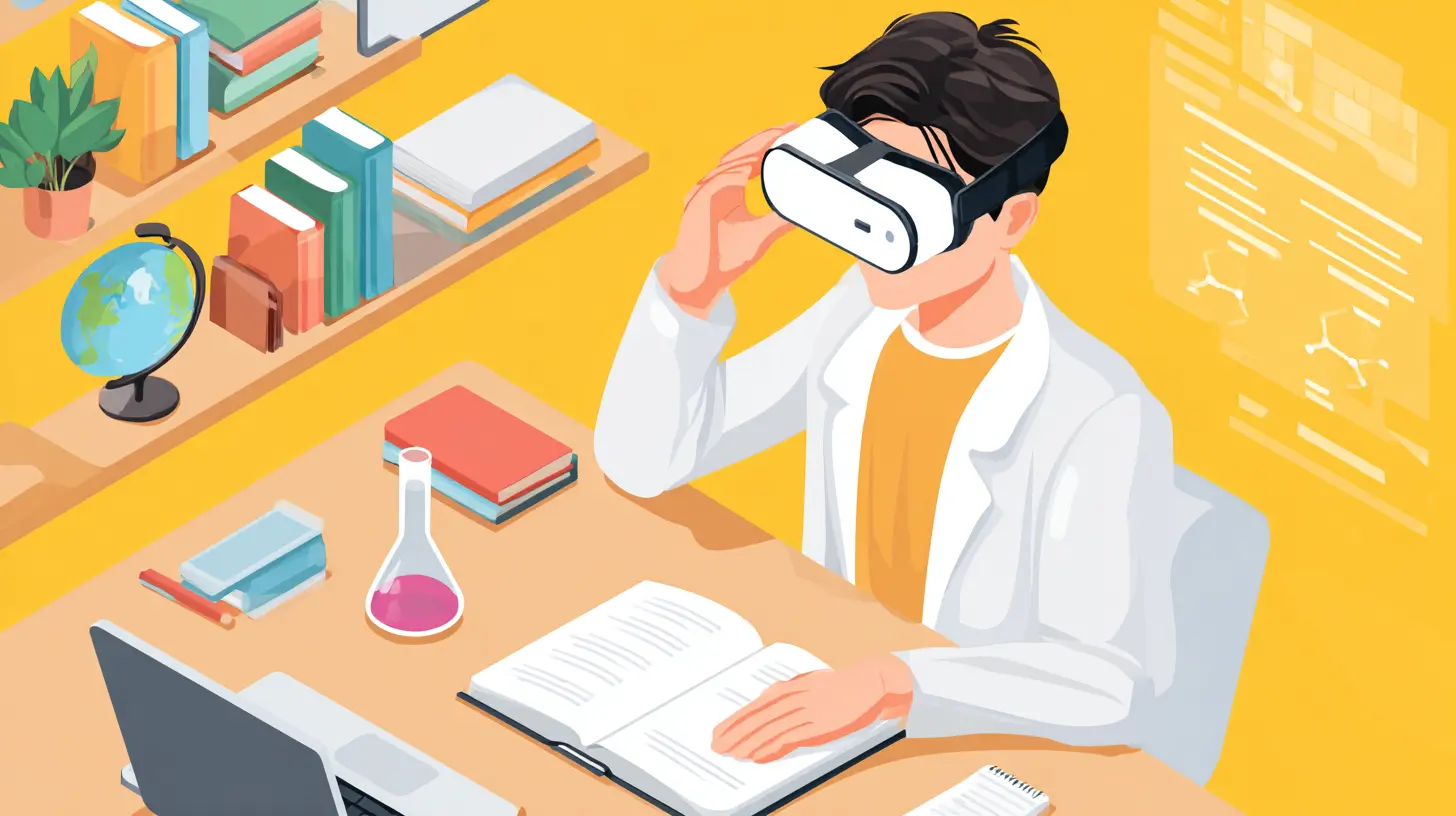
Why Should You Bother Maximizing Your Virtual Lab Experience?
You might be wondering, “Can’t I just click through and hope for the best?” Oh yes, my lazy friend, you absolutely can... if you want to tank your grades and not learn a thing. But if you actually want to understand the concepts, maybe impress your professor, or gasp—be ready for real-world labs later—then it's time to level up.Virtual labs are like gym workouts. Do them half-heartedly, and you’ll look exactly the same. Go all in, and suddenly you’re flexing intellectual muscles you didn’t know you had.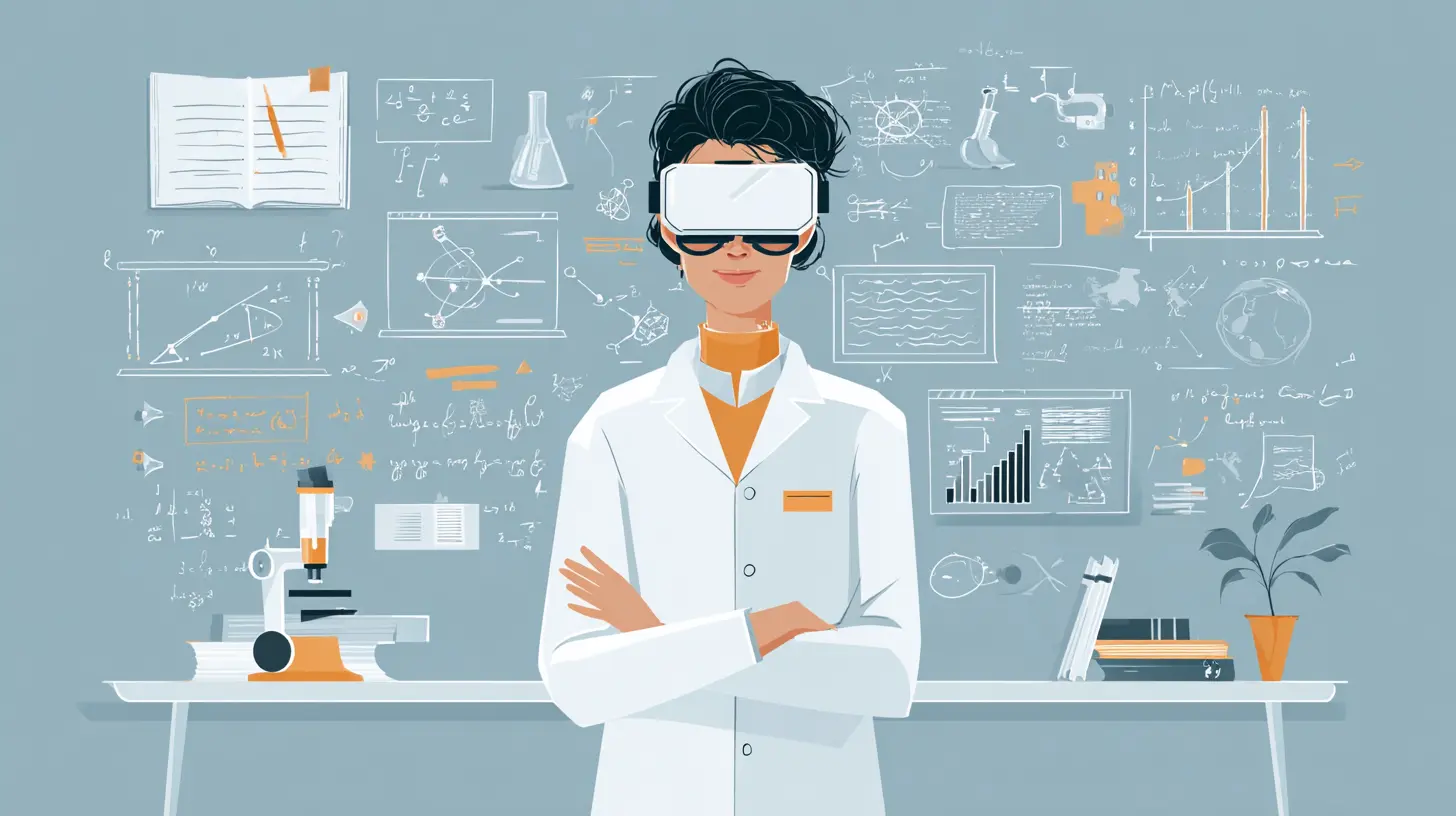
Step-by-Step Guide to Crushing It in Virtual Labs
1. Pretend It’s Real (Because It Kinda Is)
Think of virtual labs as flight simulators for aspiring pilots. Would you want your pilot to skip the simulator? Nope. So get your head in the game. Wear a lab coat if it helps you get in the zone (no judgment here). Act like you’re dealing with actual chemicals, pipettes, or frog guts. Your brain learns better when you treat simulations seriously.2. Set the Mood (Yes, Really)
This isn’t Tinder—you’re not setting the mood for romance. But you are trying to create an environment where your brain isn’t distracted by twenty tabs and your phone blowing up. Close everything that isn’t related to the lab. Light a candle if that helps you focus. And please, no Netflix in the background. Multi-tasking is a lie. Sorry, not sorry.3. Do the Pre-Lab Work (Yes, That Boring Stuff)
I get it. Pre-lab readings are the broccoli of virtual learning. No one wants to eat it, but it’s good for your academic health. Skipping the pre-lab is like walking into IKEA without a map. You’ll get lost, frustrated, and probably end up assembling your lab report backwards.Skim the theory, understand the objectives, and prep like you’re about to mix volatile chemicals. Having background knowledge makes the whole process smoother and (dare I say) fun?
4. Take Notes Like a Detective Solving a Crime
Don’t just mindlessly click buttons. Pay attention to what happens. Jot down observations, note unexpected results, and question everything. Be that annoying detective who doesn’t believe the obvious. “Why did the pH drop when I added this reagent?” – ask it, note it, Google it later if you must.Pro tip? Use different colored pens or highlighters. It tricks your brain into thinking the act of note-taking is mildly exciting.
5. Use That Pause Button Like It Owes You Money
One ridiculously underrated feature of virtual labs? The pause button. Don’t just rush through as if you’re trying to speedrun a chemistry degree. Slow it down. Pause. Breathe. Reflect. Wonder. “Why did that solution turn blue? Is something reacting? Should I be concerned?” (Okay, maybe not that last one.)Take your sweet time. No one’s judging.
6. Ask Dumb Questions (They’re Secretly Smart)
Don’t be afraid of looking clueless. In fact, embrace it. Ask your instructors, friends, or the ever-patient Google. The only stupid question is the one you didn’t ask—and then failed the quiz because of it.Besides, nobody’s born knowing what titration means. We all had to Google it at some point (yes, even your science prof).
7. Screenshot Everything Like It’s Evidence in a Trial
Virtual labs don’t end when you close the tab. You’ll probably have a post-lab assignment or quiz waiting to jump you. So take screenshots. Lots of them. Graphs, results, error messages—anything that might come in handy later.Treat your virtual lab like a Netflix documentary: you never know what moment will be crucial later on.
8. Collaborate and Conquer
Who says virtual means isolated? Form study groups, hop on a Zoom call, and do the labs “together.” Discuss what you’re seeing, debate the outcomes, and laugh at each other’s blunders (lovingly, of course).Science is a team sport. Just because you’re online doesn't mean you have to be alone.
Bonus Tips for Overachievers (You Know Who You Are)
If you’re the Hermione of your online course and want to go the extra mile, here are a few spicy extra-credit moves:- Record your sessions: Watch them back, cringe at your own mistakes, and fix them next time.
- Connect theory with practice: Read up on real-world uses of whatever you’re studying. Gas laws in scuba diving? Yes, please.
- Challenge the simulation: Try changing variables that aren’t required. See what happens. Go wild (within academic reason).
Common Pitfalls to Avoid Like Academic Plague
Let’s not sugarcoat it—there are plenty of traps lurking in the digital weeds.- Clicking without thinking: You're not trying to win a speed-clicking competition on YouTube.
- Skipping instructions: Would you DIY a spaceship without instructions? No? Then why skip your lab manual?
- Not saving your work: Rookie mistake. Save. Everything. Twice.
- Thinking the lab is the goal: Nope. Understanding the concept is the crown jewel. The lab is just how you get there.
But… Are They Even Worth It?
Cue the existential question. Are virtual labs even legit?Spoiler alert: YES. While they might not replace the thrill of real-life explosions (hopefully minor ones), they provide a safe, repeatable, and often more accessible way to learn.
Think of them like flight simulators. No one wants their first flight to be the real thing without prior practice. Same goes for dissecting frogs or mixing acids. Virtual labs give you the confidence and rehearsal you need before stepping into the real deal.
Wrapping It All Up (Without a Lab Accident)
So, how do you really maximize your virtual lab experience? Simple: Treat it seriously, prepare mentally, engage fully, and don’t be afraid to mess up and learn from it. It’s not just about clicking through a flashy interface—it’s about building real understanding, one simulated experiment at a time.In a world where education is shifting faster than a chemical reaction gone wrong, virtual labs are our digital playgrounds for discovery. So, polish your goggles (even imaginary ones), crack open that virtual experiment, and go full mad scientist—with a mouse instead of a Bunsen burner.
Because science waits for no one. Not even in cyberspace.
all images in this post were generated using AI tools
Category:
Distance EducationAuthor:

Madeleine Newton
Discussion
rate this article
2 comments
Georgia Hines
Embrace curiosity; it transforms virtual labs from tools into gateways of infinite discovery.
February 9, 2026 at 1:05 PM
Madeleine Newton
Thank you! Embracing curiosity indeed unlocks the full potential of virtual labs, turning them into powerful avenues for exploration and deeper understanding.
Ace McLanahan
Great tips! Engaging actively enhances virtual lab learning.
January 31, 2026 at 3:23 AM
Madeleine Newton
Thanks for your feedback! Engaging is key to getting the most out of virtual labs.