Fun and Simple Ways to Practice Math at Home
8 February 2026
Let’s face it—math doesn't always get the best reputation. It’s often labeled as boring, hard, or just plain “not my thing.” But what if we told you it doesn’t have to feel like a chore? What if math could actually be... fun?
Whether you're a parent trying to help your child sharpen their skills, or a student looking to boost your confidence, there are plenty of fun and simple ways to practice math at home. And no, we’re not talking about drilling flashcards until your eyes glaze over. We mean real-life, hands-on, and interactive methods that make learning math feel more like playtime.
Ready to change the way you see math? Let’s dive in!
Why Make Math Fun?
Before we jump into all the amazing activities, let's chat about why it’s so important to have fun with math.When math is enjoyable, it becomes easier to understand. Kids stop fearing mistakes and start getting curious. That curiosity fuels confidence, and confidence leads to success. Simple, right?
Plus, when you embed math into everyday activities, you’re not just helping with school—you’re teaching real-life problem-solving skills.
So, how can we make math part of the daily routine without making it feel like extra homework?
1. Turn Everyday Activities into Math Adventures
Math is all around us. Seriously—EVERYWHERE. Once you start looking, it pops up in the most unexpected places. So why not use that to your advantage?Cooking: A Hidden Math Goldmine
Cooking with your kids? You're also teaching fractions, measurements, ratios, and even multiplication or division. Try asking:- “If we need 1/2 cup but we only have a 1/4 cup measure, how many scoops do we need?”
- “This recipe serves four, but we have six people. How do we adjust the ingredients?”
It’s practical math, and bonus—you get a snack at the end!
Grocery Store Math
Next time you’re at the shop, it's time for a math mission.- Compare prices: "Which is the better deal?"
- Estimate totals: "How much will these five items cost?"
- Practice addition, subtraction or percentages during sales.
All of these teach financial literacy, too!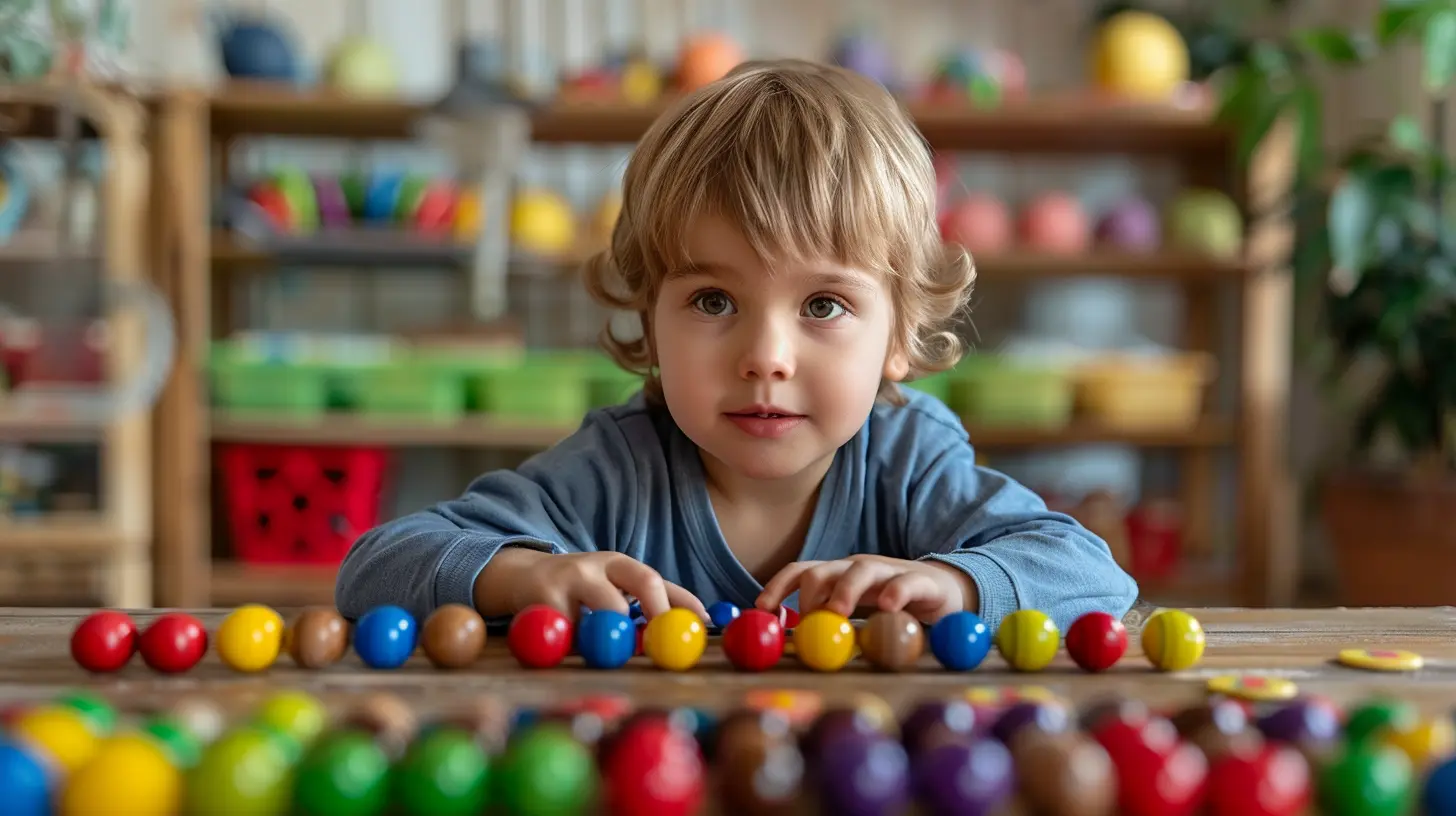
2. Use Games to Make Numbers Fun
Who doesn’t love games? Kids (and adults) learn WAY faster when they’re having fun. The best part? You probably already have half these games at home.Board Games That Add Up
Try these classic (and math-rich!) games:- Monopoly – Teaches counting money, adding, and subtracting.
- Yahtzee – Great for quick addition and probability.
- Uno – Helps with number recognition and sequences.
- Dominoes – Perfect for matching, patterning, and counting.
Want to shake things up? Create your own math board game together! All you need is a die, a few rules, and a prize for the winner.
Card Games with a Twist
Deck of cards = instant math practice.- War becomes a practice in greater than or less than.
- Try 21 (Blackjack) for quick addition.
- Invent your own rules: “Draw two cards and subtract the smaller from the larger.”
Learning math has never felt so competitive (in a good way).
3. Get Moving with Active Math
Sitting still? That might work for a test, but for learning? Not always. Some brains need to move to think. So let’s combine math with movement!Math Treasure Hunt
Hide number clues around the house. Each clue leads to the next with a math problem. For example:- “To find your next clue, solve this: What’s 9 + 6?”
- The answer leads to a spot with that number (like page 15 in a book or room number 15).
Use riddles, puzzles, and simple problems for hours of engaging fun.
Hopscotch... with a Math Upgrade
Draw a number line with chalk. Call out problems like “5 + 3” and have kids jump to the correct answer. Fast-paced and full of giggles!4. Use Technology the Smart Way
Screen time doesn't always have to mean mindless scrolling or zoning out to cartoons.There are amazing math apps and websites that make learning feel like gaming.
Top Kid-Approved Math Apps
- Prodigy – Role-playing game that weaves in math exercises.- Khan Academy Kids – Free, fun, and perfect for younger learners.
- Moose Math – Bright, colorful, and super interactive for early learners.
- Math Tango – Great for adding, subtracting, and logic puzzles.
Let your child choose their favorite. When they feel in control, they’re more likely to stay engaged.
5. Craft and Create with Math
Not every kid is into numbers... but maybe they love art! Why not blend creativity with math?Origami: Geometry in Action
Folding paper into shapes? That’s geometry at work! Discuss angles, lines of symmetry, and fractions (when paper is folded in halves, quarters, eighths—see what we did there?).Build with Blocks or LEGO®
Challenge your kids with tasks like:- “Build a symmetrical tower.”
- “Use only even-numbered bricks.”
- “Create a pattern using red and blue blocks.”
It’s math. It’s engineering. It’s pure imagination.
6. Make Math a Part of the Conversation
Sometimes, the best way to practice math is just to talk about it.Math Talk at the Dinner Table
Ask fun questions like:- “What’s the craziest number you can think of?”
- “Would you rather have $1 every day forever or $10,000 right now?”
- “If you could make your own coin, what value would it have?”
These questions boost reasoning skills, and you just might learn something new about how your child thinks.
7. Reward Curiosity, Not Just Right Answers
Here’s the truth: Mistakes are part of the process. What we want is effort, thinking, and curiosity.Celebrate the Attempt
When your child tries a tough problem, don’t just wait for the right answer. Cheer them on for trying.- “I love how you approached that!”
- “That was a creative way to solve it!”
Make math a safe space. With less fear, there’s more fun.
8. Set Realistic Goals and Celebrate Progress
Math isn’t a “get it all at once” subject. It takes time. Persistence. Practice.Start Small, Dream Big
Set weekly goals like:- “Practice multiplication facts for 10 minutes every day.”
- “Try two new math games this week.”
- “Use math in cooking dinner once this week.”
Then? CELEBRATE! Ice cream party, dance break, stickers—whatever makes them smile.
Final Thoughts
Math doesn't have to be scary or confusing. It can be part of your everyday life, quietly building confidence, one fun experience at a time.The key is to make math feel like a natural part of playtime, conversation, and daily activities. Keep it light, stay curious, and always focus on progress—not perfection.
So go ahead—mix some fractions, play a math-filled board game, or solve puzzles on a rainy afternoon. You might just find that math at home can be your favorite subject after all.
all images in this post were generated using AI tools
Category:
Math SkillsAuthor:

Madeleine Newton
Discussion
rate this article
2 comments
Axel Whitley
Mathematics is not just a subject; it’s a language that shapes our understanding of the world. Engaging in playful, everyday math activities fosters critical thinking and problem-solving skills, transforming mundane moments into opportunities for discovery and lifelong learning.
February 15, 2026 at 1:18 PM
Madeleine Newton
Thank you for your insightful comment! I completely agree—math truly is a powerful language that enhances our understanding and empowers us through playful learning.
Sebastian Harmon
Thank you for sharing these creative and engaging ideas! It's inspiring to see how fun math can be at home. These activities not only help children learn but also foster a love for numbers and problem-solving. I can't wait to try them with my kids!
February 12, 2026 at 1:08 PM
Madeleine Newton
Thank you for your kind words! I'm thrilled to hear you found the ideas inspiring, and I hope your kids enjoy them! Happy exploring!