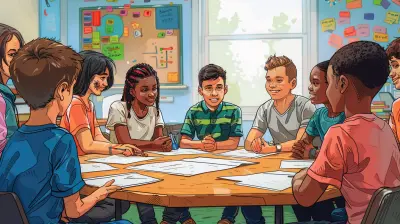
Cultivating Empathy Through Peer Review and Feedback
6 July 2026
Empathy is the golden thread that stitches humanity together, a quiet force that fosters understanding, connection, and growth. Yet, in the fast-paced world of education, it often gets lost in the noise of deadlines and grades. What if I told you that the simple act of peer review and feedback could be the secret ingredient to cultivating empathy?
Yes, you heard me right. When students engage in reviewing each other’s work, they aren’t just critiquing ideas—they’re stepping into someone else’s shoes, seeing the world through their lens, and building a bridge of understanding. Let’s dive deep into why peer review and feedback are more than just academic exercises.
The Empathy-Powered Magic of Peer Review
Walking a Mile in Someone Else’s Words
We live in a world where perspectives collide and merge like waves meeting the shore. Peer review invites students to take a moment, step back, and truly engage with another person’s thoughts. When you evaluate a classmate’s work, you’re not just looking for grammatical errors—you’re deciphering the intent, the emotion, the effort behind each word.Think about it: when you read a peer’s essay or project, you encounter their struggles, their triumphs, their thought process. Slowly, a realization dawns—"Hey, they’re just like me." That shared vulnerability is the breeding ground for empathy.
Feedback: A Mirror Reflecting Growth
Feedback isn’t just about pointing fingers; it’s about lighting a path. When students offer constructive feedback, they learn the delicate balance between honesty and kindness. You can’t simply say, “This is terrible.” Instead, you learn to phrase it in a way that encourages rather than diminishes.Phrases like:
✔️ “Your argument is strong here, but adding an example would make it even more compelling.”
✔️ “I really liked your introduction—it pulled me in! Maybe consider adding the same energy to your conclusion.”
These subtle shifts in language teach students how to communicate with care—a skill they’ll carry far beyond the classroom.

The Ripple Effect of Empathetic Peer Review
Strengthening Emotional Intelligence
Giving and receiving feedback is an emotional endeavor. It requires students to manage their emotions, be receptive to critique, and respond in a way that is helpful rather than defensive. This constant practice strengthens emotional intelligence, making them not just better students, but better humans.Fostering a Growth Mindset
Constructive criticism can feel like a storm battering the shore, but it’s also what reshapes the landscape. Students who receive feedback with an open mind begin to see critiques not as personal attacks but as stepping stones toward improvement.A student who once dreaded peer review now thinks:
"Oh, this feedback pushes me to improve. I hadn't considered this angle before!"
This shift in mindset transforms the way they approach challenges—not just academically, but in life.
Strengthening Communication Skills
Empathy and communication go hand in hand. When students engage in peer review, they learn to express their thoughts clearly and respectfully. They pick up on tone, nuance, and the power of words. By offering suggestions in a constructive way, they develop a skill that will serve them in professional and personal relationships alike.
Roadblocks to Empathy in Peer Review (And How to Overcome Them)
The Fear of Hurting Feelings
One of the biggest roadblocks? The fear of stepping on toes. Many students hesitate to offer honest feedback because they don’t want to offend their peers. But feedback doesn’t have to be ruthless to be useful.? Solution: Teach students the “feedback sandwich” approach—start with positive comments, provide constructive criticism, and end on an encouraging note. This framework makes critique feel less like a punishment and more like a conversation.
The Dread of Receiving Criticism
Nobody likes feeling judged. Some students take feedback personally, seeing it as an attack on their abilities rather than an opportunity to improve.? Solution: Normalize mistakes. Remind students that even the greatest writers, scientists, and artists depend on feedback. Creating a culture where critique is seen as a tool for growth, rather than failure, helps students embrace the process.
Lack of Trust in Peer Feedback
Let’s be honest—students sometimes doubt whether their peers’ feedback is even useful. They might think, “What does my classmate know that I don’t?”? Solution: Train students in effective peer review strategies. Teach them what to look for, encourage specific suggestions rather than vague comments, and reinforce the idea that fresh perspectives bring new insights.

Making Peer Review a Habit
So, how do you weave empathy-driven peer review into the fabric of education?✔️ Start Small: Begin with low-stakes reviews—simple exercises where feedback doesn't feel overwhelming.
✔️ Model Empathy: Show students what constructive feedback looks like. Offer examples of effective and ineffective critiques.
✔️ Encourage Reflection: After receiving feedback, have students write about their experience. What feedback resonated? What changes did they make? This reflection cements the learning process.
✔️ Create a Safe Space: Foster a classroom environment where feedback is seen as an opportunity, not a threat. Encourage respect, kindness, and open-mindedness in every interaction.
Conclusion: The Power of Empathy in Education
At its core, education isn’t just about absorbing facts; it’s about becoming a more thoughtful, empathetic, and engaged citizen of the world. Peer review and feedback serve as quiet yet powerful tools in this mission. They encourage students to listen, to care, and to see beyond themselves.So the next time you find yourself reviewing a peer’s work, take a moment to truly engage. You’re not just helping them improve—you’re fostering a culture of empathy, one thoughtful comment at a time.
all images in this post were generated using AI tools
Category:
Peer FeedbackAuthor:

Madeleine Newton
Discussion
rate this article
1 comments
Makayla Blevins
Empathy isn't just a skill; it's a bridge. Through peer review and feedback, we learn to understand different perspectives, fostering connections and growth. Let's embrace this journey together and make our voices heard!
July 6, 2026 at 3:16 AM
Madeleine Newton
I completely agree. Empathy truly transforms feedback into a powerful tool for connection and growth. Let's keep supporting each other as we share our perspectives.